Why decontamination is critical
Run your fingertips gently across your vehicle's paintwork after it has been thoroughly washed. If it feels rough like fine sandpaper, you are feeling bonded contamination. These are microscopic particles of industrial fallout, brake dust, and road tar that have melted into the outer paint layer.
Washing alone cannot move these contaminants. Detailing is the structured, gentle extraction of these particles to prep the surface before any optional machine polishing or sealant application.
Our 8-Stage Detailing Process
1. Physical Inspection
Every detailing project begins with paint depth measurements. We use electromagnetic gauges to evaluate how much clear coat remains on metal panels, checking for previous repairs or dangerously thin paint zones.
2. Safe Pre-Wash & Rinse
We perform our safe exterior wash routine to strip away all loose topical mud and traffic film, ensuring we do not drag loose dirt around during decontamination.
3. Chemical Iron Fallout Removal
We spray specialized pH-balanced chemicals that turn purple when reacting with embedded brake-dust iron particles. This reaction dissolves the sharp microscopic metal shards so they can be safely rinsed off without friction.
4. Tar & Adhesive Dissolving
Sticky asphalt tar from resurfaced UK motorways is treated with a gentle solvent. This dissolves the black droplets safely, allowing them to melt away from lower wings and door panels.
5. Mechanical Clay Bar Cleansing
Using lubricating sprays, we sweep a synthetic clay bar across the panels. The clay catches remaining tree sap, paint overspray, and environmental contaminants, pulling them out of the paint's micro-crevices.
6. Multi-Stage Paint Assessment
Using intense swirl-finder lighting, we inspect the dry panels. This helps map the level of swirl marks, light scratches, and oxidation to plan the polishing approach.
7. Optional Machine Refinement
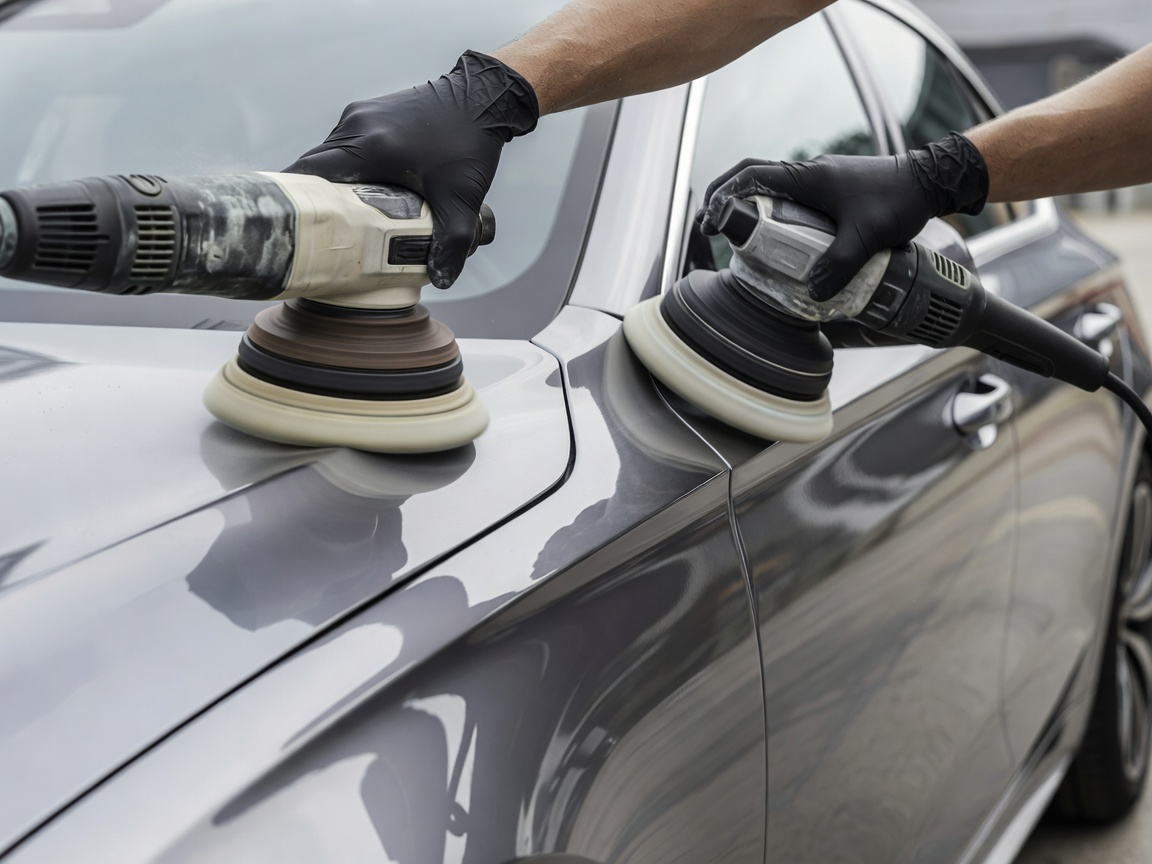
Using dual-action polishing machines and micro-abrasive polishing compounds, we gently refine the outer layer of the clear coat. This levels off micro-swirls, helping restore clarity and gloss.
8. Surface Prep & Protection Layer
The polished paint is wiped down with an alcohol compound to strip polishing oils. Then, we apply your chosen polymer sealant or ceramic guard to seal in the clean, glossy finish.
Crucial Realism Notice
Deep stone chips, heavy scratches that have sliced through the clear coat to the primer, and severe clear coat failure (peeling) cannot be removed by polishing. These issues require a panel respray. We will provide an honest, professional paint assessment before undertaking any mechanical detailing work.