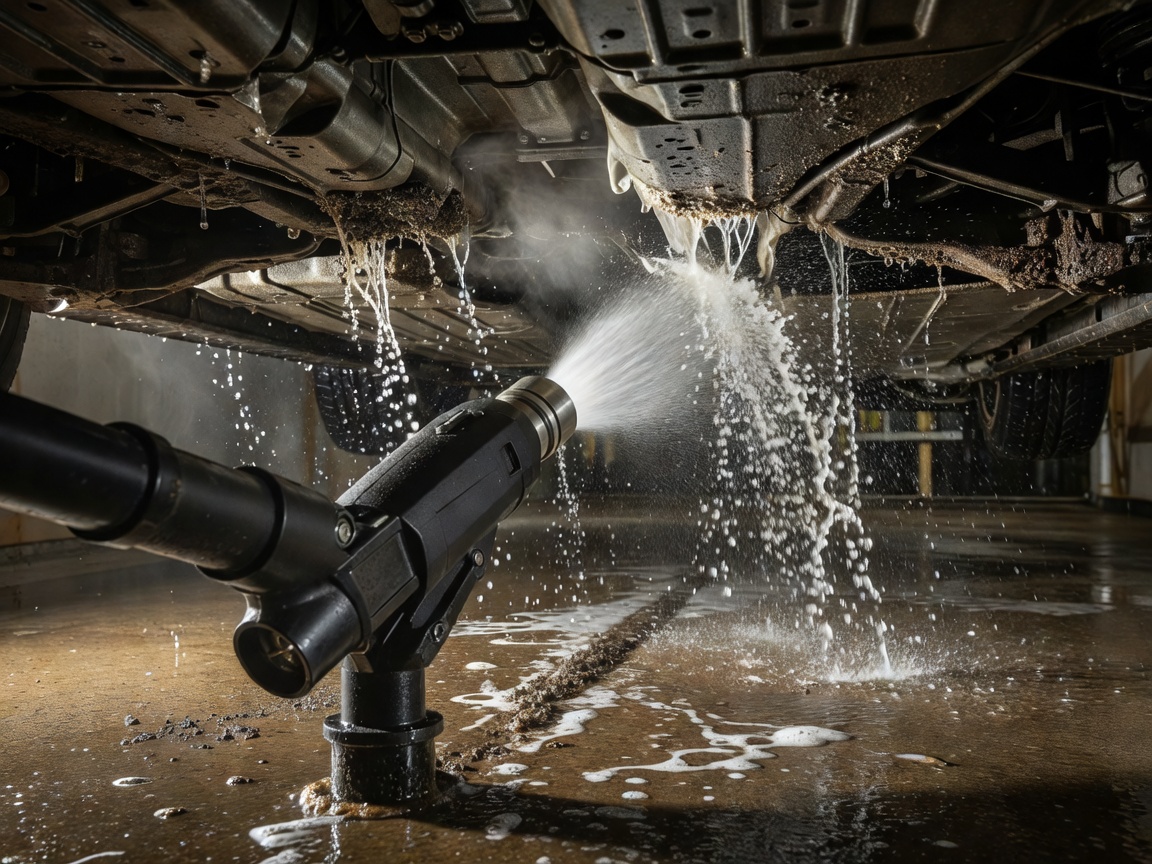
Winter: Corrosive Road Salt & Grime
During cold spells, municipal gritting vehicles spread rock salt (sodium chloride) and grit on UK roadways to melt ice. This salt is kicked up by tyres, forming a highly corrosive white crust over your underbody, side skirts, and alloy wheels.
If salt is left on damp metal surfaces, it acts as an electrolyte, rapidly accelerating the formation of rust. Mud flaps, subframes, and suspension components are particularly vulnerable.
Our Winter Action Plan:
- Bi-weekly underbody rinse-down: Flushing arches and under-panel lips to prevent salt accumulation.
- Safe wheel cleaning: Dissolving brake dust and corrosive salt before they etch wheel clear coats.
- Glass care: Applying hydrophobic window sealants to clear rain and heavy spray during wet motorway driving.
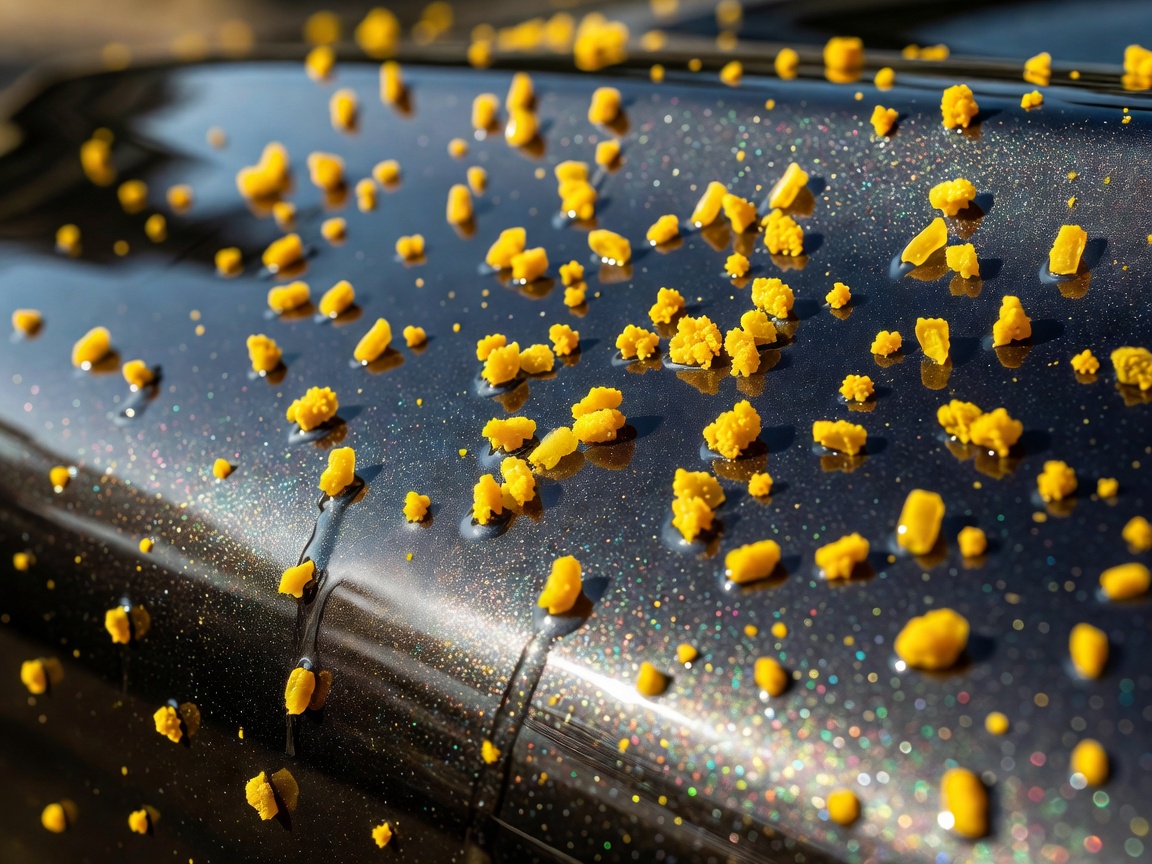
Spring: Pollen & Acidic Tree Sap
As vegetation awakes, UK cars are blanketed in a fine layer of sticky green/yellow pollen. Simultaneously, parking near oak, pine, or sycamore trees results in droplet splashes of highly acidic sap.
If tree sap is allowed to dry in direct sunlight, it contracts, pulling the paint's clear coat inwards. This creates localized fractures and circular etching marks that are highly visible.
Our Spring Action Plan:
- Sap breakdown pre-washes: Utilizing gentle organic chemical softeners to dissolve sticky sap bonds without scraping.
- Pollen elimination: Safely foaming the body to rinse away powdery residues before wiping with a mitt.
- Cabin filter updates: Ensuring deep cleaning of interior vents to minimize pollen circulation inside the cabin.
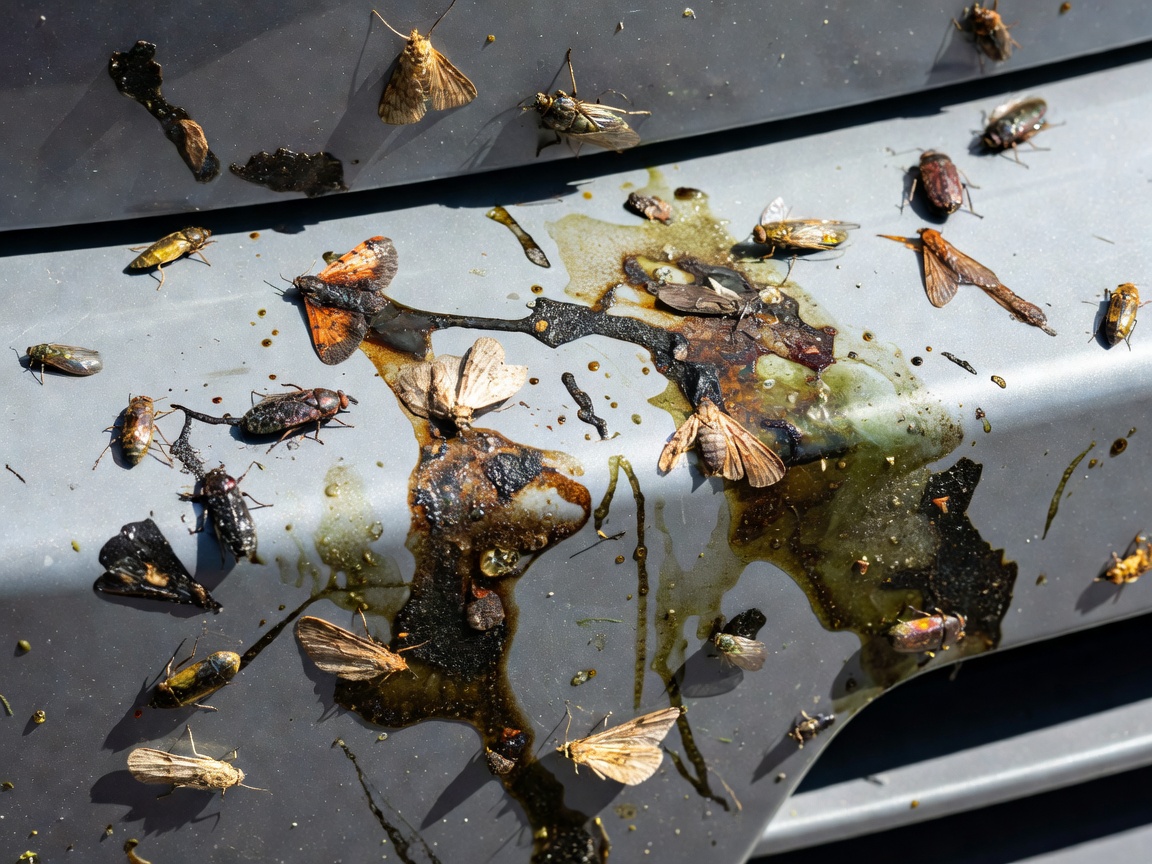
Summer: Road Dust & Baked-On Insect Remains
Summer brings long motorway journeys, bringing your vehicle into contact with hundreds of insects. As they strike the front bumper and bonnet, their organic fluids dry rapidly, becoming highly acidic as they bake in warm sunlight.
Additionally, dry UK summers create dusty country lanes and brake-dust accumulation on wheels that bake in high braking temperatures.
Our Summer Action Plan:
- Protein-dissolving bug treatments: Splat-removing enzymes are allowed to sit on bumpers to melt baked-on residues.
- UV-protective sealants: Applying high-durability coatings that can help mitigate paint oxidation from strong sunlight.
- Windscreen purification: Deep clean cycles on wipers and external glass to clear greasy summer traffic films.
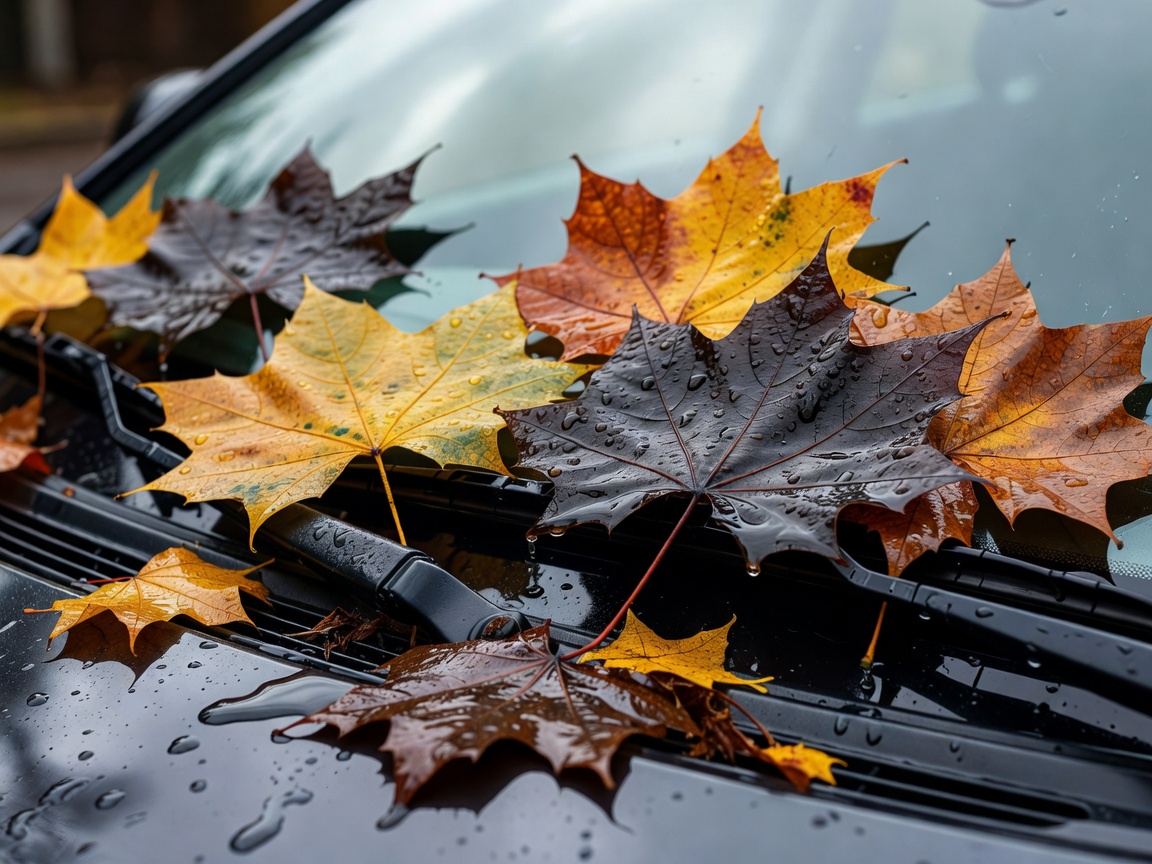
Autumn: Wet Leaves & Blocked Drain Channels
Wet autumn leaves contain acidic compounds that can stain paint if left to decay on bonnets and boots. Furthermore, leaves easily get trapped in the scuttle panel drain channels below your windscreen wipers.
When these water drains clog, rainwater cannot escape. It builds up and spills backwards through interior cabin air intakes, creating wet passenger footwells, damp carpets, and musty odours.
Our Autumn Action Plan:
- Scuttle drain clearing: Extracting packed leaf mulch from rain runoffs to stop cabin water ingress.
- Hydrophobic window treatments: Safeguarding visibility against low-sun autumn glare and heavy downpours.
- Clay bar refinement: Stripping away summer's baked contaminants before winter's freezing cold takes hold.